Biogas Digestate Fertilization
דישון ביוגז עיכול تخمير مخلفات الغاز الحيوي
The project explores the use of small-scale biogas systems as a sustainable solution for managing raw chicken manure in agricultural systems. By converting organic waste into renewable cooking gas and liquid fertilizer, the initiative aims to address environmental challenges while supporting circular agriculture and resource efficiency in arid regions.
Starting date 2024

Related topics
Research center
Research Context & Challenge
The use of untreated chicken manure in agriculture presents environmental and public health challenges, including nutrient imbalance, soil degradation, odor, and contamination risks. In many agricultural systems, particularly in water-scarce regions, there is a need for more sustainable waste management practices that reduce environmental impact while maintaining soil productivity.
Biogas digestion offers a potential solution by transforming organic waste into useful byproducts, including renewable energy and nutrient-rich digestate fertilizer. However, further research is needed to evaluate the effectiveness, safety, and agricultural performance of digestate under local desert farming conditions.
Objectives
- To evaluate the use of HomeBiogas systems for agricultural waste management
- To assess the effectiveness of digestate as a fertilizer in desert agriculture
- To reduce environmental risks associated with raw manure use
- To explore small-scale circular economy solutions linking waste, energy, and agriculture
- To strengthen regional research collaboration on sustainable agricultural technologies
Methodology & Approach
The project applies an experimental and applied research approach centered on the use of HomeBiogas systems to process raw chicken manure. Through anaerobic digestion, manure is broken down to produce biogas for cooking and liquid digestate for agricultural use.
A pilot system is planned for installation within the Arava Institute’s off-grid village, where researchers will evaluate system performance and monitor fertilizer outcomes under desert growing conditions. Agricultural testing focuses on identifying both the benefits and potential limitations of digestate use, including impacts on soil quality, crop growth, and nutrient management.
The project also emphasizes regional scientific collaboration, bringing together Israeli and Jordanian research institutions to jointly address shared environmental and agricultural challenges.
Key Activities
- Installation and operation of pilot HomeBiogas systems
- Processing of chicken manure through anaerobic digestion
- Evaluation of biogas production for household energy use
- Agricultural testing of liquid digestate fertilizer
- Monitoring of soil, nutrient, and crop performance indicators
- Cross-border collaboration between regional research institutions
- Development of sustainable waste-to-resource management models
Impact & Outcomes
The project aims to demonstrate how small-scale biogas systems can support more sustainable agricultural practices by reducing reliance on untreated manure while generating renewable energy and reusable fertilizer products.
If successfully implemented, the research will contribute to improved nutrient management, reduced environmental impact, and greater integration of circular economy principles within desert agriculture. The project also serves as a model for regional cooperation on environmental innovation and sustainable resource management.
At present, implementation is temporarily on hold pending administrative approval processes related to external grant funding. Despite this delay, the project framework and pilot systems are fully developed and prepared for deployment once approvals are finalized.
Circular Agriculture & Resource Recovery
A central aspect of the project is its focus on circular agriculture, where agricultural waste is transformed into productive resources rather than discarded. By linking waste treatment, renewable energy generation, and fertilizer production within a single system, the initiative demonstrates how integrated technologies can improve sustainability and resource efficiency in arid agricultural environments.
The project contributes to broader efforts to develop decentralized, low-cost solutions that support both environmental resilience and rural livelihoods.
Researchers
Eating Off the Grid
The study explores food systems in Al-Fura’a, one of the largest unrecognized Bedouin villages in the Negev Desert.

Ecosystem Services
The Center for Arid Socio Ecology has been studying ecosystem services of the Arava since 2010 and the project is ongoing.
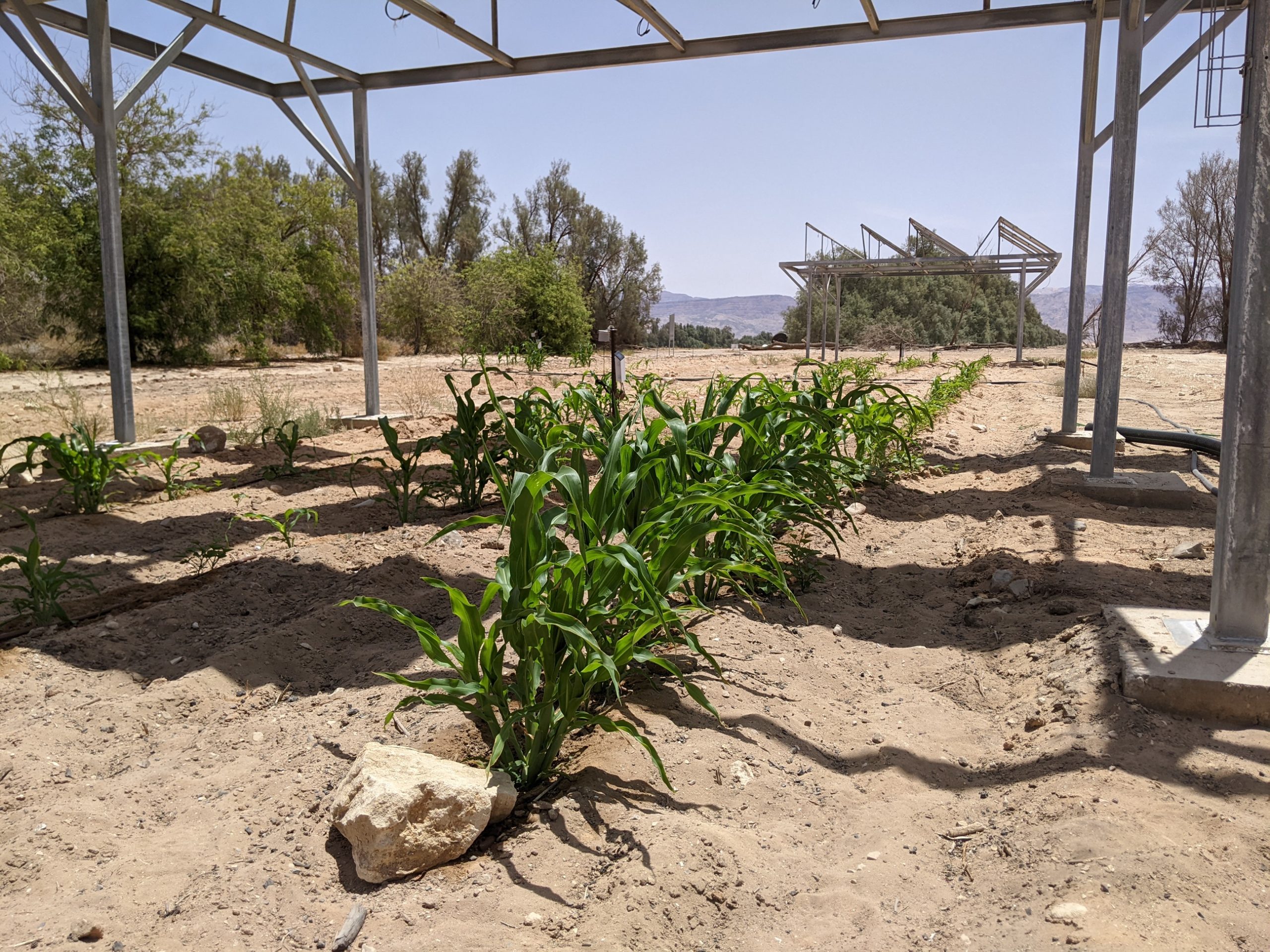
AgriPV Applied Research
The project investigates agrivoltaic (AgriPV) systems—integrating photovoltaic energy generation with agricultural production—to advance sustainable, off-grid farming solutions in arid environments.