Off-Grid Technology Hubs for Israel’s Bedouin Sector
מרכזי טכנולוגיה מחוץ לרשת مراكز التكنولوجيا خارج الشبكة
This project establishes off-grid technology hubs in Bedouin communities, providing independent water, energy, and food systems. Combining infrastructure with education, it serves as a living platform for sustainable, desert-adapted technologies. The initiative empowers local communities while advancing scalable solutions for climate resilience.
Starting date 2021
Related topics
Research center
Research Context & Challenge
Many Bedouin communities in the Negev Desert face limited access to essential infrastructure. In unrecognized villages such as Al Furaa, residents often lack reliable electricity, clean water, wastewater treatment, and safe public facilities. These gaps directly impact education, health, and quality of life, particularly for young and growing populations.
In nearby Abu Grīnāt, basic infrastructure exists, yet access to advanced sustainable systems, vocational training, and green employment opportunities remains limited. Across both communities, geographic isolation, economic marginalization, and high youth populations underscore the need for integrated, locally adapted solutions.
Objectives
- To design and implement decentralized, off-grid systems for water, energy, and food production
- To improve access to essential services in underserved Bedouin communities
- To integrate sustainable technologies into educational environments
- To build local capacity through hands-on training and applied research
- To develop scalable models for desert resilience and community-based sustainability
Methodology & Approach
The project applies an integrated, systems-based approach combining renewable energy, water generation, wastewater treatment, and sustainable agriculture. Technologies are embedded within schools, transforming them into living laboratories where infrastructure supports both daily needs and experiential learning.
The approach emphasizes low-resource, off-grid solutions tailored to arid environments, alongside community-driven planning and culturally responsive design. Ongoing research and monitoring inform system optimization and support the development of replicable models.
Key Activities
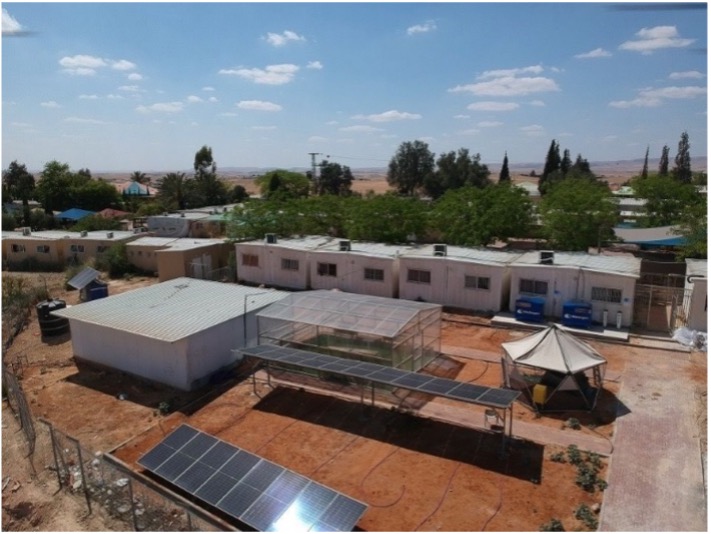
- Establishment of an off-grid technology hub at Al Furaa Secondary School
- Installation of agrivoltaic solar systems to provide continuous electricity
- Deployment of biogas systems converting organic waste into usable energy
- Implementation of off-grid wastewater treatment and reuse for irrigation
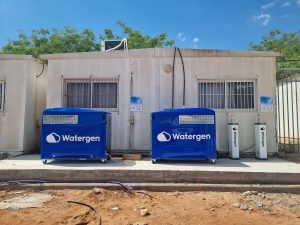
- Installation of atmospheric water generation systems for drinking water
- Development of a community garden and restoration of a nearby wadi as a research site
- Construction of a protected shelter (Mamam) to improve student safety
- Design and construction of a visitor center using traditional Bedouin architecture and sustainable materials
- Creation of a school-based Research and Development Center focused on desert agriculture
- Hosting of academic delegations, workshops, and collaborative research initiatives
- Expansion of the model to a second hub at Dror Vocational School in Abu Grīnāt
Impact & Outcomes
The project has significantly improved access to essential infrastructure, including clean water, renewable energy, and safe learning environments in underserved communities. By integrating research, education, and implementation, the hubs provide students with practical skills in sustainable technologies while supporting local capacity building.
As demonstration sites, these hubs illustrate a scalable model for combining infrastructure development with education and applied research. The project contributes to long-term community resilience and offers a replicable framework for addressing resource challenges in arid and marginalized regions.
Laguna Innovation
Laguna Innovation is a private commercial company that was established after ten years of research and development on wastewater treatment and reuse carried out by researchers at the Arava Institute. Laguna Innovation reflects the Arava Institute’s commitment to translating its expertise in research and development into scalable, real-world solutions. Laguna Innovation addresses a critical gap in providing wastewater services to off the grid communities. Laguna’s patented Vertical Green Wall Bio-Filter (VGW-BF) combines off-grid, 100% solar-powered operation with a virtually sludge-free process to deliver high-quality treated water for irrigation, thus promoting food security and improved agricultural production. The technology has been deployed in Bedouin schools in the Negev, agricultural communities in the West Bank, a vocational institution in South Africa, and commercial sites in Peru—demonstrating how Arava-driven innovation creates practical environmental impact. Laguna is currently negotiating a project to service indigenous communities in northern Argentina and will soon be installing a system in Nepal.
Beyond technical performance, Laguna serves as a platform for cross-border collaboration and scalable impact. By applying the same technology in Israeli and Palestinian communities, it enables shared learning around water reuse and decentralized infrastructure, while private-sector adoption in agriculture, hospitality, and industry multiplies environmental benefits and accelerates regional resilience. In this way, Laguna advances both sustainable water management and the Arava Institute’s mission of cooperation through environmental solutions.
Researchers
Contributors
The project is led by the Center for Transboundary Water Management (CTWM) at the Arava Institute, in collaboration with local schools, community partners, and supporting organizations including the Ministry of Education and other academic and environmental institutions.
Press
AgriPV Applied Research
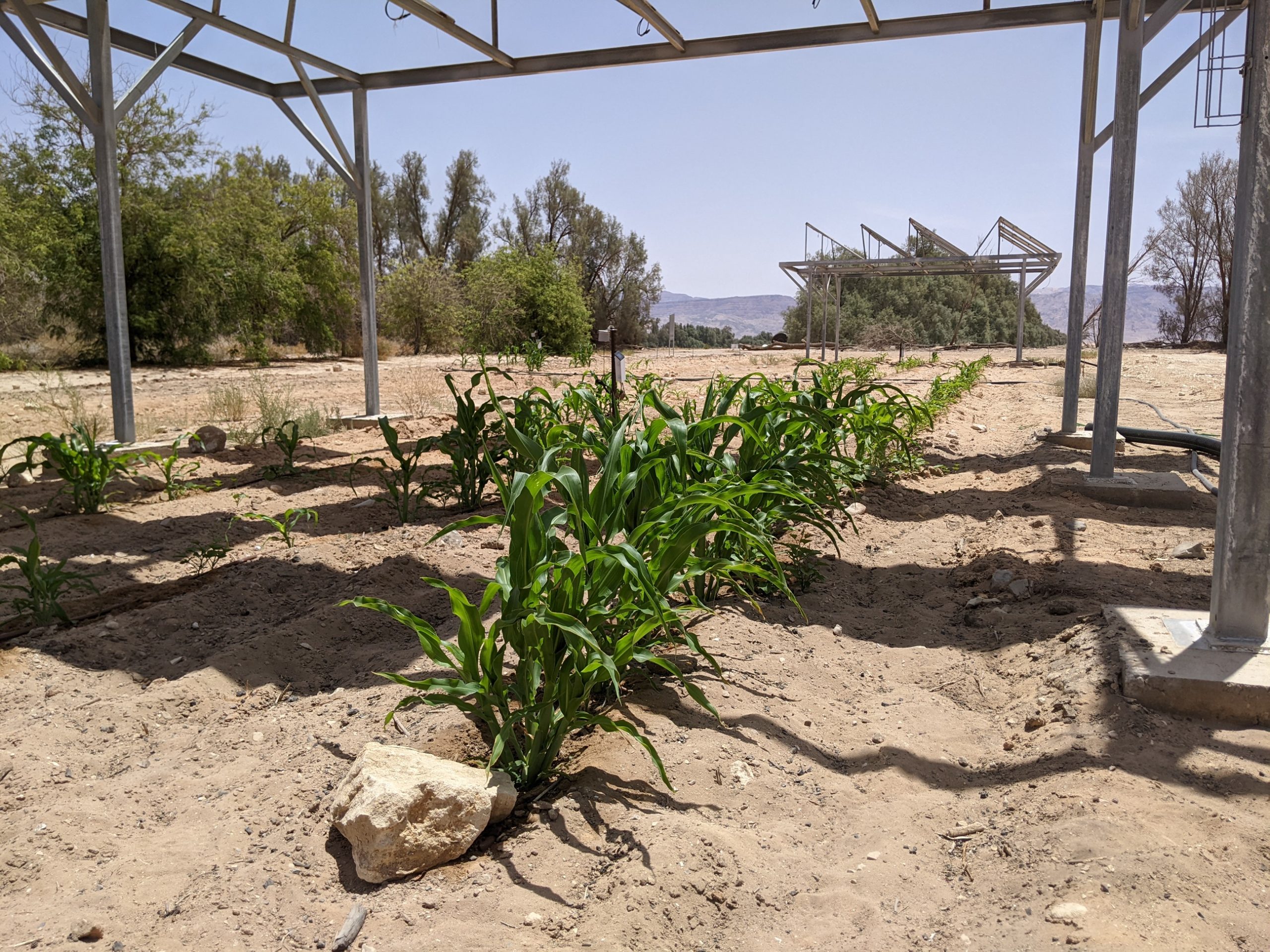
The project investigates agrivoltaic (AgriPV) systems—integrating photovoltaic energy generation with agricultural production—to advance sustainable, off-grid farming solutions in arid environments.
Solar Thermal Technologies
The study contributes to the development of sustainable, low-cost heating technologies suitable for arid and off-grid environments.
Off-Grid Water & Waste Systems in the Jordan Valley
The project addresses critical challenges related to water scarcity, sanitation, and resource efficiency in one of the region’s most environmentally vulnerable areas.