AgriPV Applied Research
מחקר יישומי אגרי-וולטאי البحوث التطبيقية في مجال الزراعة الكهروضوئية
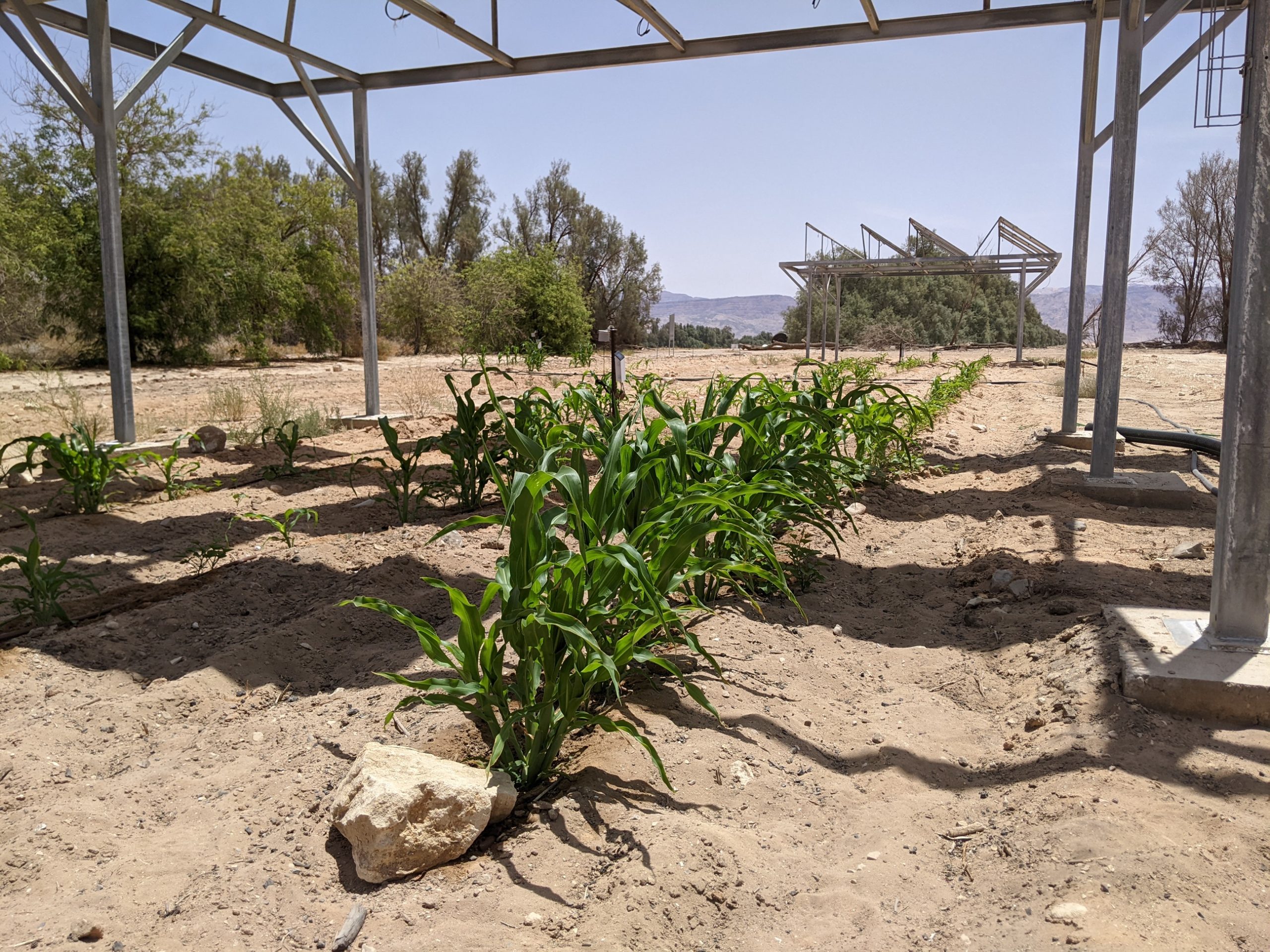
The AgriPV Applied Research Project explores agrivoltaic systems that combine solar energy generation with agricultural production to support sustainable, off-grid farming in arid environments. Based in the Arava Desert and Kibbutz Ketura, the project integrates field trials, controlled experiments, and advanced farming technologies to develop practical, scalable solutions. It also contributes to regional efforts advancing a Water–Energy–Food–Ecosystems approach across the Mediterranean.
Starting date November 2020
Related topics
Research center
Research Context & Challenge
Agriculture in hyper-arid environments is constrained by water scarcity, extreme temperatures, and limited land availability. At the same time, the expansion of solar energy infrastructure creates competition for land use.
Agrivoltaic systems present a dual-use solution, allowing simultaneous production of food and energy. However, optimizing these systems requires a detailed understanding of interactions between solar radiation, crop performance, water use, and microclimatic conditions. In addition, the need for off-grid energy solutions and reduced labour intensity further drives innovation in system design and automation.
Objectives
- To evaluate agrivoltaic system performance under desert conditions
- To optimize the balance between crop productivity and solar energy generation
- To analyze water use efficiency and microclimate effects under PV shading
- To develop integrated, off-grid food–energy systems
- To test automation and precision agriculture technologies
- To contribute to scalable WEFE Nexus solutions for climate-resilient agriculture
Methodology & Approach
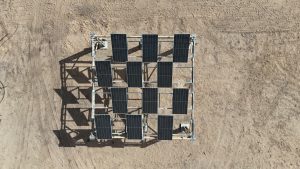
The project applies a multi-layered experimental approach combining field trials, controlled systems, and technological innovation. Agrivoltaic setups include elevated and ground-mounted photovoltaic systems, enabling analysis of shading, water balance, and crop performance across multiple growing seasons.
A key component of the research is the operation of three distinct solar field configurations, each designed to test different energy management models within agrivoltaic systems.
- Ground-mounted system:
An on-grid system that feeds electricity directly into the national grid, serving as a reference for conventional solar integration. - Overhead agrivoltaic (AGV) system:
This system, now integrated into a greenhouse, operates on a hybrid energy model combining solar power, the national grid, and a diesel generator. During daylight hours, solar energy powers the greenhouse and CSA facilities. At night, electricity is automatically supplied from the grid, with a backup generator activated in case of combined solar and grid outages. - Inter-space agrivoltaic system (robot-integrated):
A fully autonomous, off-grid system supplying electricity to a nearby off-grid village. This system demonstrates the potential for independent, decentralized energy production within agrivoltaic environments.
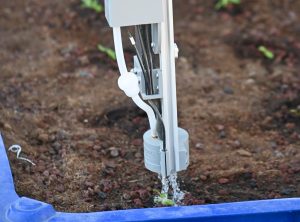
In parallel, the project integrates an automated farming platform (FarmBot), which uses real-time environmental data, image analysis, and algorithm-based decision-making to optimize irrigation, planting, and crop monitoring.
Innovation & Technology Integration
A central innovation of the project is the integration of energy systems, agricultural production, and automation within a unified research framework. The combination of agrivoltaics with robotic farming technologies enables plant-level precision management, including targeted irrigation, growth monitoring, and adaptive decision-making.
The use of multiple energy configurations—from grid-connected to fully autonomous systems—provides a unique platform for testing real-world applications of decentralized renewable energy. Together, these innovations position the project as a leading model for climate-resilient, technology-driven agriculture in arid and off-grid environments.
Key Activities
- Establishment and expansion of agrivoltaic research systems
- Operation and comparison of multiple solar field configurations
- Cultivation and monitoring of crops under varying shading conditions
- Development of lysimeter systems to study water and nutrient dynamics
- Implementation of hybrid and off-grid energy systems
- Integration of automated farming technologies (FarmBot)
- Collection and analysis of environmental, agricultural, and energy data
- Simulation and evaluation of energy storage and system performance
- Participation in regional WEFE Nexus research and demonstration initiatives
Impact & Outcomes
The project has generated extensive data across multiple growing seasons, advancing understanding of how agrivoltaic systems influence both agricultural productivity and solar energy efficiency. Findings indicate that partial shading can improve microclimatic conditions, support plant growth, and reduce photovoltaic panel temperatures, potentially enhancing system performance.
The implementation of diverse energy configurations has demonstrated the feasibility of integrating on-grid, hybrid, and fully off-grid systems within agricultural environments. These models provide valuable insights into energy resilience, system flexibility, and scalability in remote or resource-constrained settings.
The integration of automation has further improved precision, reduced labour requirements, and enabled continuous data collection, strengthening the project’s contribution to sustainable agriculture research.
Researchers
Contributors
Dr. Tali Zohar
Partners
Sustainable Development Goals


Press
The Sonia Twite Shelter Garden
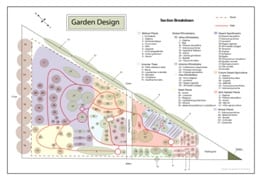
The Shelter Garden is a conservation and research initiative focused on protecting rare desert plants and restoring biodiversity in the Arava. It combines science, education, and community engagement in a living, accessible landscape.
Negev Highlands Traditional Bedouin Agriculture
The project focuses on reviving traditional Bedouin agricultural practices, conserving native medicinal plant species, and documenting Indigenous ecological knowledge in the Negev Highlands.
Introducing Native Plants into Gardening and Agriculture Systems
The project focuses on integrating native plant species into agricultural systems and community landscapes in the Arava region.