Pastoralist Communities in Climate Frontier
This multi-year research initiative examines the impacts of climate change on pastoralist communities across borderland regions, including Negev Highlands, Golan Heights, and Area C of the West Bank.<br /> The project integrates environmental, social, and political research to understand how traditional herding systems—particularly among Bedouin communities—are adapting to changing climatic and geopolitical conditions. It combines multiple subprojects addressing livestock systems, land use, infrastructure, and socio-economic resilience.
Starting date December 2022

Related topics
Research center
Research Context & Challenge
Pastoralist communities in arid and semi-arid border regions are highly vulnerable to climate variability, including rising temperatures, changing precipitation patterns, and increased resource scarcity. These environmental pressures are compounded by geopolitical constraints, land-use policies, and limited access to infrastructure.
Traditional herding systems—based on camels, goats, and cattle—are deeply interconnected with local ecosystems and cultural practices. However, shifts in climate and governance frameworks are altering grazing patterns, access to land, and livelihood stability. Understanding these dynamics requires a cross-regional and interdisciplinary approach.
Objectives
- To assess the impact of climate change on pastoralist livelihoods and grazing systems
- To analyze how environmental and geopolitical factors shape land use and resource access
- To examine differences and similarities across pastoral systems in multiple regions
- To investigate the role of infrastructure and technology in community resilience
- To explore socio-economic adaptation strategies, including alternative livelihoods
Methodology & Approach
The project employs a comparative, interdisciplinary research approach combining fieldwork, ethnographic study, and environmental analysis across multiple regions.
In the Negev, research focuses on Bedouin communities relying on camels and goats, examining how conservation policies, land access, and infrastructure limitations influence grazing practices and ecological interactions. In the Golan Heights, the study analyzes cattle grazing systems within both Jewish and Druze communities. In the West Bank, research explores cattle-based systems and their interaction with surrounding communities and landscapes.
The project also incorporates focused sub-studies, including research on the social impacts of solar-powered technologies in Bedouin communities and analysis of local economic activities linked to climate adaptation.
Key Activities
- Field-based research on grazing practices across multiple regions
- Comparative analysis of camel, goat, and cattle herding systems
- Study of land-use policies, conservation regimes, and geopolitical constraints
- Ethnographic research with pastoralist communities
- Investigation of infrastructure gaps and technological interventions
- Analysis of climate impacts on ecosystems and resource availability
- Implementation of targeted subprojects on gender, technology, and livelihoods
- Collaboration with local organizations and community stakeholders
Impact & Outcomes
The project provides a comprehensive understanding of how climate change and geopolitical dynamics intersect to shape pastoralist systems in border regions. It highlights the complexity of adaptation strategies, which are influenced not only by environmental conditions but also by policy frameworks, infrastructure access, and socio-economic factors.
Findings contribute to ongoing discussions on sustainable land management, climate resilience, and rural development, offering insights relevant to policymakers, researchers, and practitioners working in similar contexts globally.
Subprojects & Thematic Research
A key component of the initiative is a set of focused subprojects that deepen analysis in specific areas. One ongoing study examines the impact of solar-powered systems on the daily lives and socio-economic roles of Bedouin women, building on earlier longitudinal research.
Another subproject, implemented in collaboration with the Negev Coexistence Forum, explores the promotion of Bedouin handicrafts as a climate-adaptive livelihood strategy. This work analyzes market dynamics, cultural production, and the relationship between economic resilience and environmental change.
Together, these subprojects expand the scope of the research, linking environmental change to gender, technology, and local economies.
Researchers
Partners
Argania Spinosa
The project integrates decades of agricultural research with applied innovation, with the goal of establishing a sustainable, locally based argan oil industry in the region.
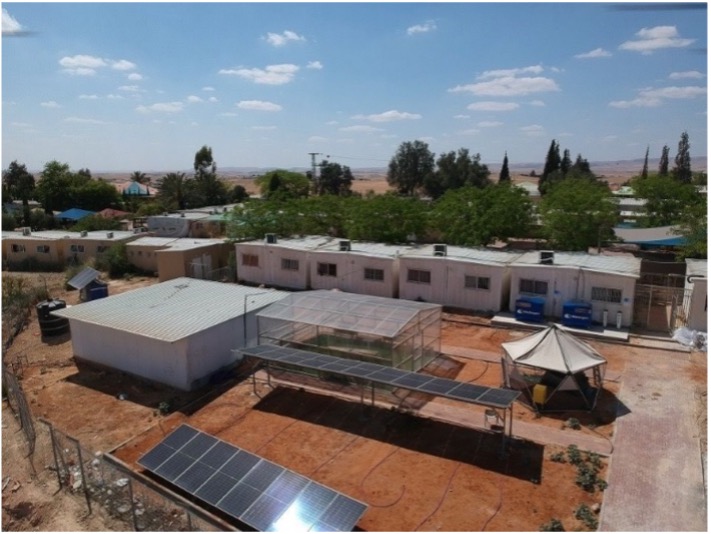
Off-Grid Technology Hubs for Israel’s Bedouin Sector
Off-grid technology hubs integrating water, energy, and education to support resilient, sustainable communities in the Negev.
Science and Sociology of Wood Burning Stoves
The study investigated both the measurable environmental impacts of wood burning and the broader social, cultural, and political dynamics associated with its use.