Science and Sociology of Wood Burning Stoves
The “Science and Sociology of Wood Burning Stoves” project is an interdisciplinary research initiative examining the environmental and social dimensions of wood-burning stove use across Israel. Conducted in collaboration with the Open University of Israel and supported by the Ministry of Environmental Protection, the project integrates environmental science with sociological analysis under the “Lifting the Smoke Screen” initiative. The study investigated both the measurable environmental impacts of wood burning and the broader social, cultural, and political dynamics associated with its use.
Starting date June 2023

Related topics
Research center
Research Context & Challenge
Wood-burning stoves are increasingly used in both urban and rural settings, often associated with lifestyle choices, cultural identity, and alternative consumption practices. However, their use raises environmental concerns, particularly related to air quality and public health.
Despite these impacts, there is limited integrated research combining quantitative environmental measurement with qualitative sociological analysis. Understanding how wood burning functions not only as a source of emissions but also as a social and cultural practice is essential for developing effective environmental policy and public awareness strategies.
Objectives
- To measure the environmental impact of wood-burning stoves, particularly air pollution
- To analyze the social and cultural drivers behind wood-burning practices
- To explore the role of wood use within broader systems of consumption and environmental politics
- To examine the socio-political ecology of wood across different communities
- To contribute to interdisciplinary research linking environmental science and sociology
Methodology & Approach
The project applies a mixed-methods approach, combining environmental monitoring with sociological research. Quantitative methods focus on developing and testing approaches to measure emissions and environmental impact from wood-burning stoves.
Qualitative research includes fieldwork across Jewish and Arab communities, examining patterns of use, cultural meanings, and social dynamics associated with wood burning. The study also investigates related economic and material systems, including food markets, timber supply chains, and the iron industry connected to stove production.
This integrated approach allows for a comprehensive understanding of both the physical and social dimensions of wood-burning practices.
Key Activities
- Environmental monitoring and measurement of emissions from wood-burning stoves
- Fieldwork and data collection across diverse communities
- Sociological analysis of consumption patterns and cultural practices
- Study of related economic systems, including wood supply and stove production
- Examination of environmental policy and public discourse
- Integration of environmental and social data into a unified analytical framework
Impact & Outcomes
The project has contributed to a deeper understanding of the environmental and social implications of wood-burning stove use in Israel. By combining scientific measurement with sociological analysis, it highlights how everyday practices are shaped by broader cultural, economic, and political factors.
The research provides a foundation for more informed policy discussions סביב air quality, environmental health, and sustainable consumption. It also demonstrates the importance of interdisciplinary approaches in addressing complex environmental challenges.
Findings from the project are currently being prepared for publication, contributing to academic discourse on environmental sociology and the socio-political dimensions of resource use.
Interdisciplinary Insight
A key contribution of the project is its integration of environmental science with social theory. By examining wood burning as both a material process and a social practice, the research reveals how environmental impacts are embedded within cultural meanings, economic systems, and political contexts.
This perspective enables a more nuanced understanding of environmental issues, supporting the development of policies and interventions that account for both technical and social dimensions.
Researchers
Contributors
The Ministry of Environmental Protection
Partners
Pastoralist Communities in Climate Frontier
This multi-year research initiative examines the impacts of climate change on pastoralist communities across borderland regions, including Negev Highlands, Golan Heights, and Area C of the West Bank.
Negev Highlands Traditional Bedouin Agriculture
The project focuses on reviving traditional Bedouin agricultural practices, conserving native medicinal plant species, and documenting Indigenous ecological knowledge in the Negev Highlands.
Off-Grid Technology Hubs for Israel’s Bedouin Sector
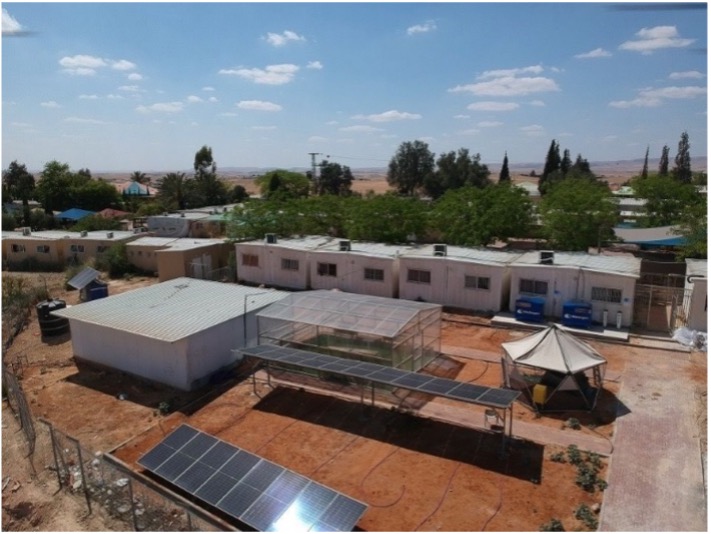
Off-grid technology hubs integrating water, energy, and education to support resilient, sustainable communities in the Negev.