Jumpstarting Hope in Gaza
عودة الأمل إلى غزة
Jumpstarting Hope in Gaza (JHG) is a joint Palestinian–Israeli environmental-humanitarian initiative addressing immediate environmental and infrastructure needs in Gaza under crisis conditions. Since early 2024, we have established and supported internally displaced persons (IDP) Green Shelters, improving living conditions and strengthening resilience where essential systems have been severely disrupted.
Topics
Keywords
Initiative Context & Challenge
As displacement in Gaza has become increasingly prolonged, many emergency shelters have evolved into de facto long-term communities. While humanitarian assistance remains essential, the greatest challenge is no longer only the shortage of food or tents – it is the absence of systems. Water, sanitation, electricity, shelter quality, and waste management have deteriorated to the point that daily survival is increasingly fragile and undignified.
Severe water scarcity: The vast majority of Gaza’s water is unsafe for drinking, leaving displaced populations almost entirely dependent on a limited and inconsistent external supply.
Critical energy shortage: A deepening energy deficit and damaged infrastructure severely limits access to electricity, affecting essential services and daily survival in IDP shelters.
Sanitation system breakdown: Collapsing sanitation infrastructure, combined with water shortages, creates acute public health risks, and heightens the threat of widespread disease outbreaks.
In the face of this crisis, JHG focuses on providing access to clean water, building sanitation infrastructure, expanding energy accessibility, and supporting food security – integrating these services into off-grid systems designed to function reliably where central services have collapsed.
Objectives
Sustainable living conditions under prolonged crisis: Deliver immediate essential services to displaced persons, while establishing resilient, sustainable off-grid water, sanitation, energy, and shelter for living until rebuilding is completed.
Leadership and community building: Empower locally led teams to manage sites on the ground, fostering ownership, adaptability, and community cohesion in response to evolving needs.
Scalable recovery model: Develop a replicable and scalable model for displaced persons rehabilitation in Gaza, informing future reconstruction efforts and international response frameworks.
Approach
Through locally led teams, we implement the Green Shelter Model – a holistic, modular approach that transforms emergency displacement shelters into safer, more resilient shelters and communities. By integrating water, sanitation, and hygiene (WASH) systems, renewable energy technologies, and community-led governance, the model reduces dependence on unstable external supplies such as fuel, water trucking, and emergency distributions, while strengthening local ownership. Designed to be flexible and scalable, it can be adapted to changing conditions and replicated across Gaza.
Key Activities
Development and operation of community-managed Green Shelters: Upgrading existing IDP shelters by integrating off-grid infrastructure, improving living conditions, and strengthening local capacity for long-term operation and resilience.
Delivery of WASH services: Providing safe drinking water through Atmospheric Water Generators (Watergen) and solar-powered desalination, alongside the construction of toilets, showers, communal water points, and decentralized wastewater treatment systems. Four Watergen systems were deployed at International Medical Corps field hospitals in April 2026, with four additional systems planned for other sites during 2026.
Deployment of renewable energy infrastructure: Installing off-grid solar PV systems to power water production, desalination facilities, lighting, cooking and other essential services while reducing reliance on fuel-based generators.
Strengthening of community-led governance and local capacity: Supporting local shelter management committees responsible for day-to-day operations, maintenance, resource allocation, and participatory decision-making.
Raising public awareness and mobilizing financial support through the institute’s annual Noam Segal RIP conference, alongside a crowdfunding campaign conducted with Partnership for Peace, which raised more than 800k NIS through approximately 3,000 individual donations, primarily from Israelis.
Impact & Outcomes
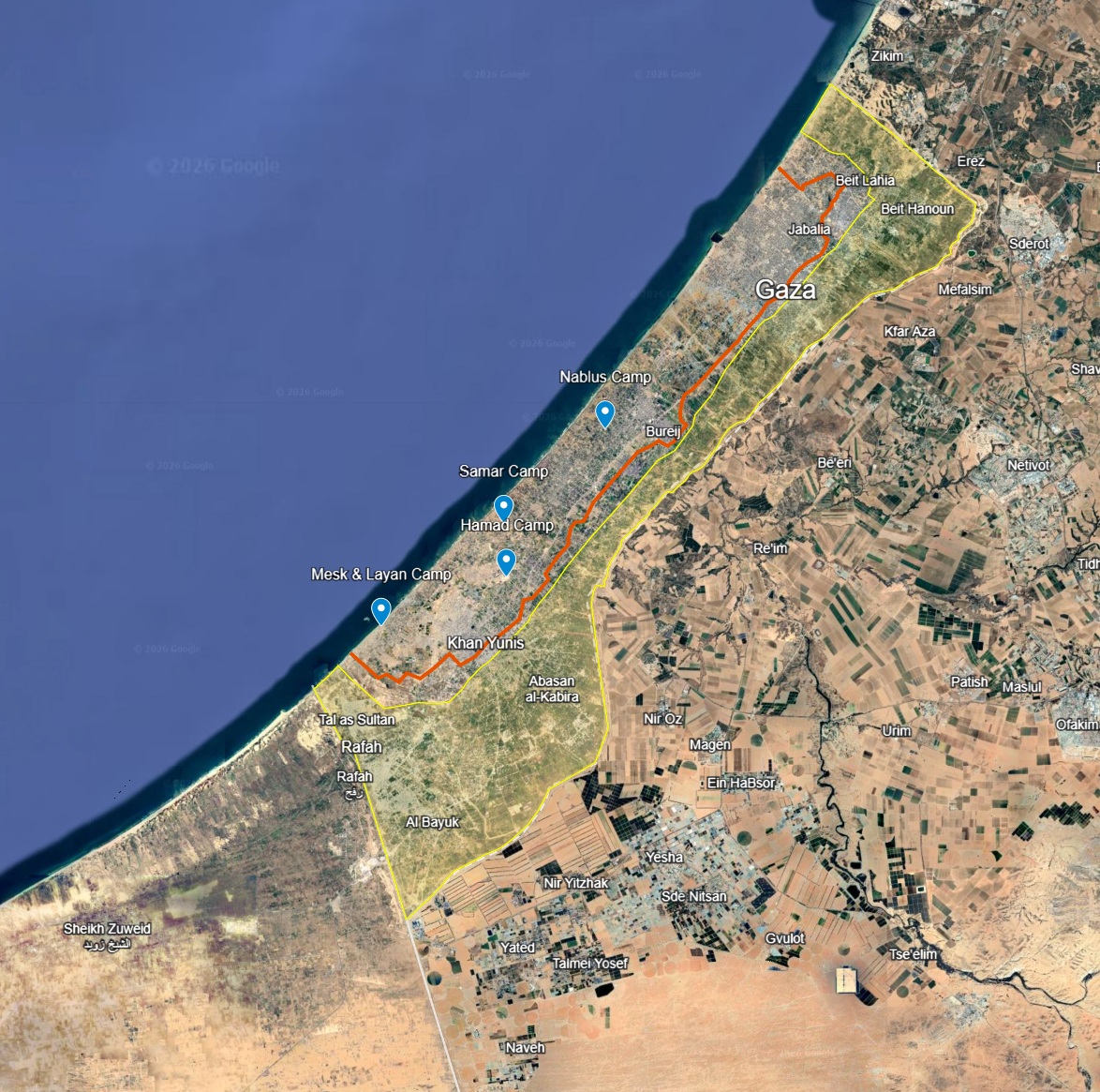
Our Green Shelters currently support approximately 8,165 people (1,513 families) across four displacement shelters in southern Gaza. Our current priority is upgrading existing sites with alternative water sources, improved WASH infrastructure, renewable energy, and other locally adaptable technologies that reduce dependence on fragile external systems and improve health, dignity, and self-reliance. As conditions allow, the model is designed to expand to additional sites, with the long-term goal of reaching 10,000 people in southern Gaza and 10,000 in northern Gaza.
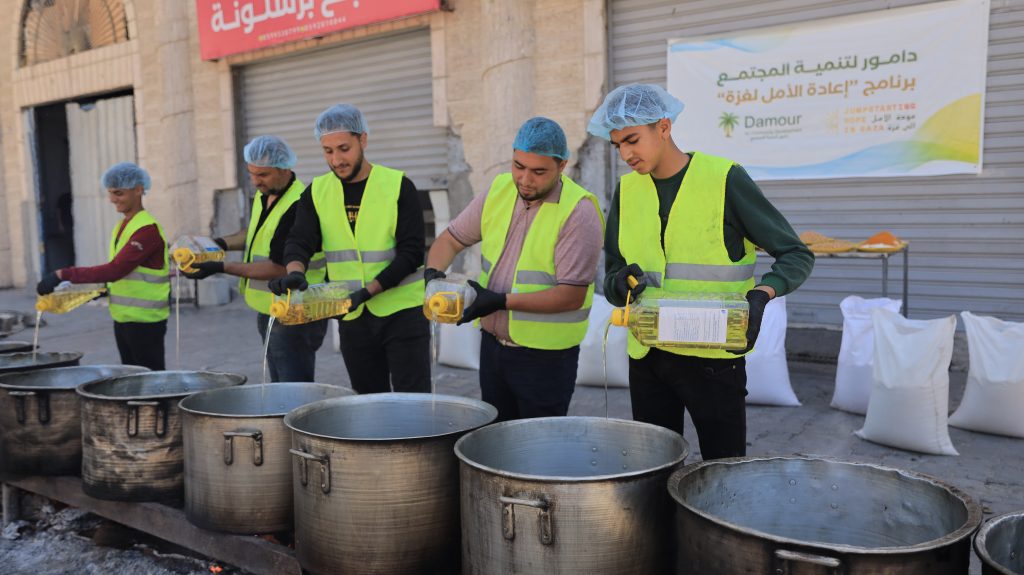
Complementing these environmental interventions, our Palestinian partner, Damour, provides food assistance at the Green Shelters through food distribution, community kitchens, and partnerships that improve access to nutritious meals for displaced families.
A Unique Cross-Border Collaboration
The JHG coalition represents a powerful partnership between Palestinian and Israeli organizations, bringing together cross-border expertise to deliver impactful environmental-humanitarian solutions under crisis conditions. At a time when cooperation across communities has become exceptionally difficult, this initiative demonstrates the enduring value of trusted partnerships built over many years.
Partners
UN Sustainable Development Goals


Policy Briefs & Reports

Regional food security hubs
The Regional Food Security Hub project is a proposed multi-stakeholder platform dedicated to strengthening food security coordination, knowledge integration and research-to-implementation translation in hyper-arid contexts.
West Bank Environmental Infrastructure Initiatives
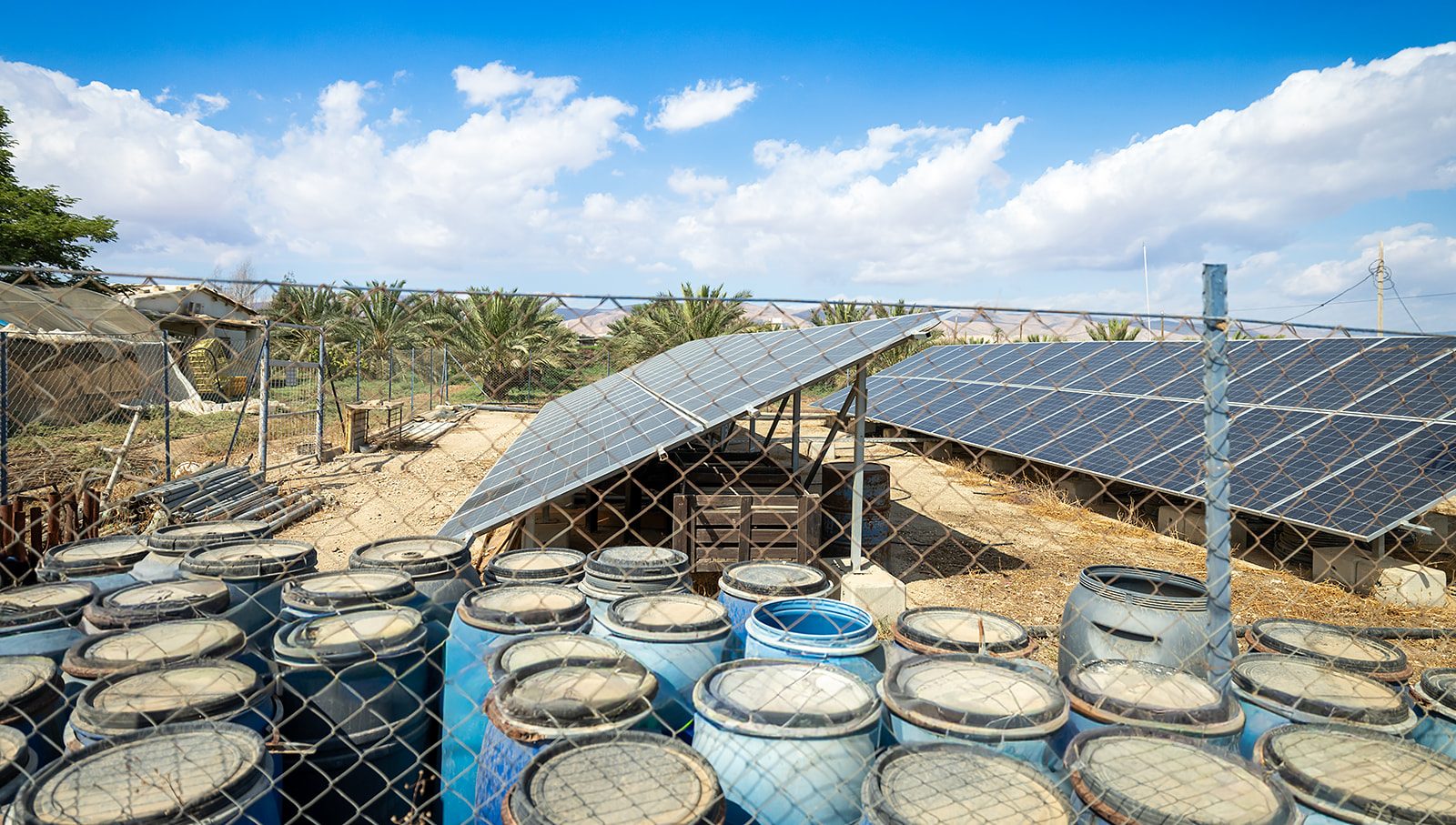
unblock stalled water, wastewater, energy, and solid waste projects across the West Bank through environmental diplomacy and project-specific mediation between Israeli and Palestinian regulatory authorities and municipal and regional bodies.