West Bank Environmental Infrastructure Initiatives
פיתוח תשתיות סביבתיות בנות-קיימא בגדה המערבית مبادرة دعم حلول مستدامة للبنية التحتية البيئية في الضفة الغربية
In these initiatives we work to unblock stalled water, wastewater, energy, and solid waste projects across the West Bank through environmental diplomacy and project-specific mediation between Israeli and Palestinian regulatory authorities and municipal and regional bodies. Our environmental experts identify the regulatory, institutional, and political bottlenecks holding each project back and bring together the relevant stakeholders to help resolve them. Our work spans transboundary wastewater treatment and reuse, renewable energy, and solid waste management, with the goal of advancing essential infrastructure projects, reducing environmental pollution, and establishing coordination mechanisms that enable future projects to move forward.
Start dateNovember 2026
Initiative Context & Challenge
Water, wastewater, energy, and solid waste infrastructure projects in the West Bank stall frequently, not for lack of engineering solutions but rather due to political and institutional constraints and the absence of an effective coordination mechanism between Israeli and Palestinian authorities. Many projects require approvals or cooperation from multiple Israeli regulatory bodies and Palestinian municipal and regional authorities. However, no permanent coordination mechanism exists to resolve disagreements, address institutional bottlenecks, or navigate political barriers.
These institutional and political barriers have consequences that extend beyond delayed infrastructure development, directly affecting the environment, public health, and livelihoods of Palestinian and Israeli communities alike. Inadequate solid waste management and untreated wastewater impose significant environmental, public health risks and economic costs on both sides, including illegal dumping, cross-border air pollution, and contamination of shared water resources such as aquifers and streams.
Objectives
- Advance practical, innovative, and sustainable environmental infrastructure solutions that improve quality of life and strengthen environmental resilience across the West Bank.
- Strengthen environmental governance and coordination between Israeli and Palestinian authorities and municipalities, civil society, and other stakeholders to advance shared environmental priorities and enable future infrastructure projects.
- Build local technical and institutional capacity to develop, implement, and manage sustainable water, wastewater, energy, and solid waste solutions.
Approach
Our environmental experts operate as neutral brokers between Israeli and Palestinian authorities on a project-by-project basis. For each blocked project, the initiative identifies the specific bottleneck, such as regulatory approval, a missing communication channel, or a political sensitivity, and convenes the parties positioned to resolve it. This has included structured coordination on solid waste management, and technical and regulatory alignment on water, wastewater, and energy projects across the region. Current work focuses on mapping outstanding projects, securing the right counterparts at each stage of approval, and translating one-off resolutions into standing coordination mechanisms that can be reused across future projects.
Key Activities
- Al Bireh Treated Wastewater Trunkline: Through our environmental diplomatic efforts, a building permit was issued in 2022 to the Palestinian Water Authority (PWA) to build a treated wastewater trunkline to send agricultural water from the mountain area around Ramallah for use by Palestinian farmers in the Jericho Valley. This project is currently looking for funding.
- Ein Jarout / Qidron wastewater treatment solutions: We are currently mediating discussions between the PWA and the Israeli Water Authority (IWA) on several cross-border wastewater projects which will remove untreated wastewater currently flowing into shared aquifers, treat the wastewater, and enable their reuse in agriculture.
- Off-grid Wastewater Treatment: Building on previous pilots in the West Bank, we are advancing multiple off-grid wastewater treatment initiatives in rural communities lacking centralized sewage infrastructure. The projects deploy autonomous, solar-powered treatment systems developed at the Arava Institute, enabling communities to treat wastewater locally and safely reuse the reclaimed water for agriculture.
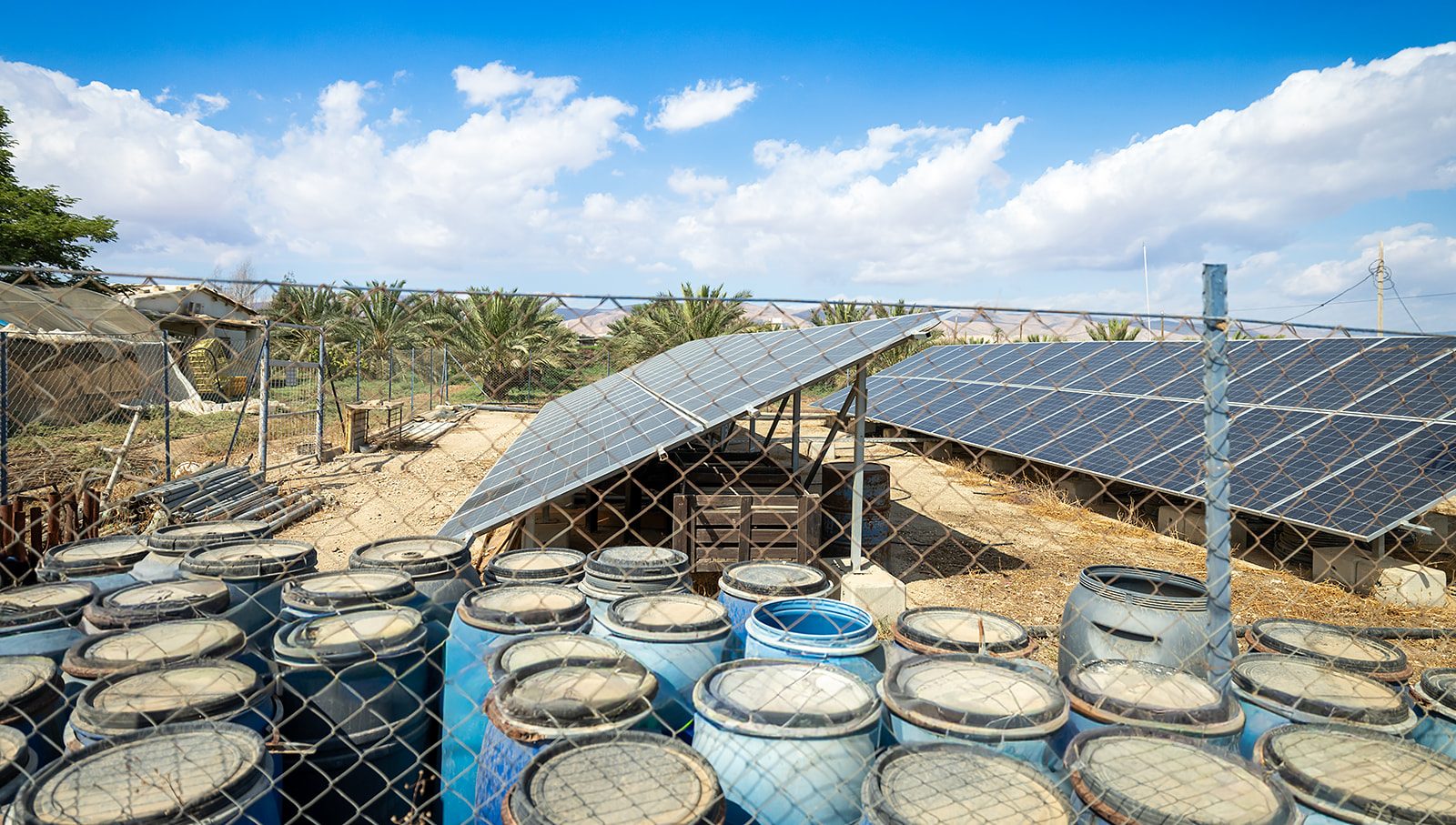
- Bani Naim Solar Field: A planned solar field which would supply green electricity to Hebron is planned in Bani Naim, an area close to Hebron. While the project is located in area A, the transmission line to Hebron crosses area C and requires approval by the Israeli Civil Administration. Because of this, the project has been blocked since 2014. We are currently working with the Palestinian Energy and Natural Resource Authority (PENRA), the Israeli Presidential Climate Forum and the Israeli Civil Administration to unblock this stalled project.
Impact & Outcomes
Outcomes are measured in projects unblocked and coordination channels established. Water and wastewater infrastructure projects, energy projects, and decentralized wastewater treatment sites have moved forward through mediation between authorities that had no prior mechanism for resolving the disagreement independently. Sustained engagement with recurring institutional counterparts is building a track record of Israeli and Palestinian authorities working through infrastructure disputes together, expanding the pool of officials on both sides who have experienced a resolved outcome and are positioned to work through future projects.
Partners
UN Sustainable Development Goals


Media